Mature trees are one of the most valuable features on a Southern Maryland property. They shade your home, hold soil in place on slopes and shorelines, and add real curb appeal. But oaks, tulip poplars, maples, and loblolly pines don't stay healthy and safe on their own. Between Chesapeake storms, summer droughts, clay soils, and a steady list of insects and diseases, trees across Calvert, St. Mary's, Charles, and Anne Arundel counties need consistent care.
This guide covers what good tree care actually includes, what to do each season, and which jobs are best left to a licensed tree service.
What Does Professional Tree Care Include?
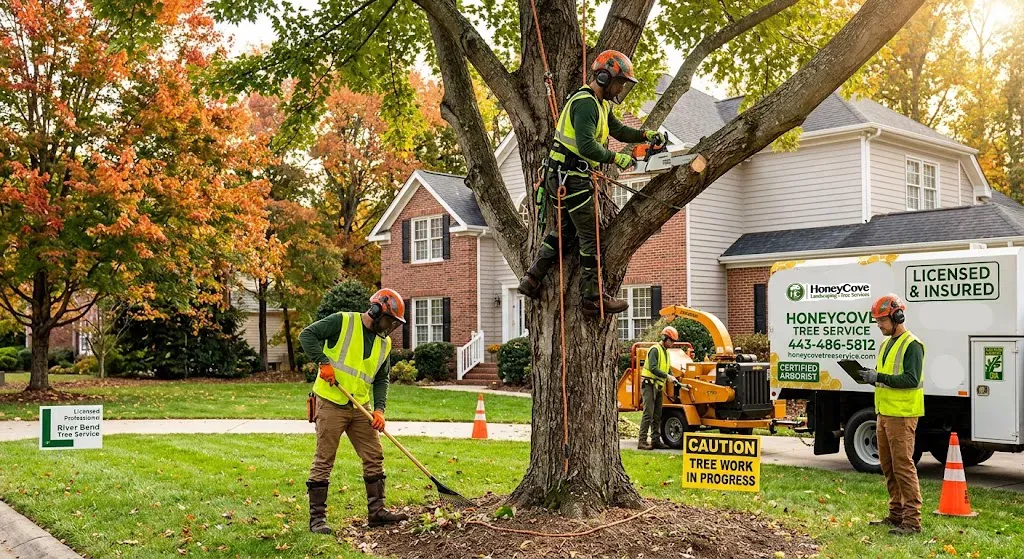
Tree care is more than cutting down trees that have already become a problem. A good tree care plan focuses on keeping trees healthy and structurally sound so removal is the last resort, not the first call. For most Southern Maryland properties, that includes:
- Pruning and trimming to remove weak, crossing, or overextended limbs and improve the tree's structure ( why trees need trimming).
- Deadwood removal to eliminate dead branches before they fall on roofs, cars, or people (why deadwood removal matters).
- Crown elevation to raise low limbs for clearance over driveways, walkways, and rooflines (what is tree elevation?).
- Health and risk inspections to catch decay, cracks, leaning, and root problems early.
- Pest and disease monitoring for threats like emerald ash borer, bagworms, and fungal problems.
- Mulching, watering, and soil care to support root health.
- Removal and stump grinding when a tree is dead, dangerous, or beyond saving.
Fall: Inspect, Plant, and Prepare for Storm Season
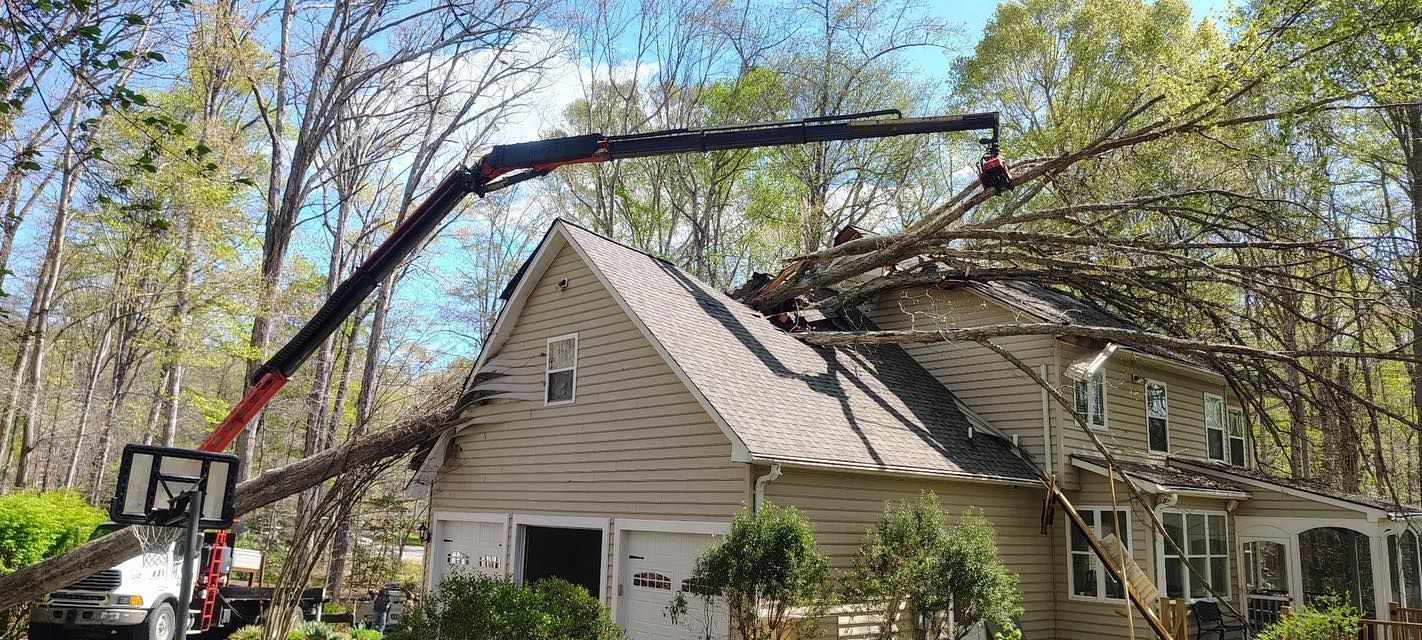
Fall is one of the best times to look closely at your trees. As leaves drop, it becomes easier to spot dead limbs, cracks, cavities, and branches hanging over your home. It's also the tail end of hurricane season, so any tree that looks questionable should be checked before the next nor'easter rolls through. Our article on how to tell if a tree is a storm risk walks through the warning signs.
Fall is also an excellent time to plant new trees. Cooler air and warm soil let roots establish before winter, giving young trees a head start in spring. Keep newly planted trees watered until the ground freezes.
Winter: The Best Season for Most Pruning
For most deciduous trees, late fall through winter is the ideal pruning window. With the leaves gone, an arborist can see the tree's full structure and make cleaner, more precise cuts. Dormant trees also experience less stress, and many insects and disease organisms are inactive, reducing the risk of infection at pruning wounds.
Winter is also when snow and ice can snap weak limbs. If a storm leaves broken or hanging branches, don't try to pull them down yourself. See our guide to caring for snow and ice damaged trees to decide whether a tree can be saved.
Spring: Mulch, Fertilize, and Watch for New Growth Problems
Spring is when trees put their energy into new leaves and roots. A few simple steps go a long way:
- Mulch correctly. Spread 2–4 inches of mulch over the root zone, keeping it a few inches away from the trunk. Avoid "volcano mulching," piling mulch against the bark, which traps moisture and invites rot and pests.
- Check leaf-out. Branches that don't leaf out, thin canopies, or early leaf drop can signal stress, disease, or root damage.
- Look for pests. Bagworms on evergreens, borers on ash trees, and other insects often show up as the weather warms. Learn more in protecting your trees from insects and disease.
Summer: Water Deeply and Protect the Root Zone
Southern Maryland summers bring heat and dry spells that stress trees, especially young ones planted within the last two years. During extended dry periods, a slow, deep soak around the drip line is far better than frequent light sprinkling.
Summer is also prime season for home projects, so protect your trees' roots. Most of a tree's roots sit in the top 12–18 inches of soil and spread well beyond the canopy. Driving heavy equipment, piling soil, or trenching inside that area can quietly kill a tree over the next few years. If you're seeing exposed tree roots, address erosion or compaction before damage sets in.
Tree Care Mistakes to Avoid
- Topping trees. Cutting the top off a tree to reduce its height creates weak, fast-growing sprouts and invites decay. It often makes a tree more dangerous, not less.
- Over-pruning. Removing too much live canopy at once stresses the tree. A qualified arborist will thin selectively rather than strip a tree bare.
- Planting too deep. The root flare, where the trunk widens at the base, should be visible at the soil line ( planting habits that help or hurt).
- Hiring unlicensed crews. In Maryland, anyone paid to prune, treat, or remove trees must hold a Maryland Licensed Tree Expert (LTE) license. An unlicensed crew puts both your trees and your liability at risk.
When to Call a Licensed Tree Expert
Some tree care is DIY-friendly, like mulching, watering, and monitoring for problems. Other work should always go to a professional. Call Honey Cove, a licensed tree service, if you notice:
- Dead or hanging limbs, especially over your home, driveway, or play areas
- Cracks or splits in the trunk or major branches
- Mushrooms or fungal growth at the base of the tree
- A new or worsening lean, or soil heaving on one side
- Branches near power lines
- Large sections of the canopy dying back
For more warning signs, read what are the signs that a tree might fall?
Tree Care FAQs
How often should trees be pruned?
Most mature shade trees benefit from professional pruning every 3–5 years. Young trees may need lighter structural pruning more often to develop strong form. Trees near homes, driveways, or power lines may need more frequent attention.
What is the best time of year to trim trees in Southern Maryland?
Late fall through winter, while trees are dormant, is the best time for most pruning. Dead, broken, or hazardous limbs should be removed any time of year as soon as they're spotted.
Can a damaged or sick tree be saved?
Often, yes. Proper pruning, deadwood removal, pest treatment, and improved soil conditions can extend a tree's life considerably. A licensed tree expert can assess the tree and tell you honestly whether care or removal is the safer choice.
Do I need a licensed tree expert in Maryland?
Yes. Maryland law requires anyone providing tree care for hire, including pruning, treatment, and removal, to be a Licensed Tree Expert. Always ask to see the license and proof of insurance before work begins.
Keep Your Trees Healthy with Honey Cove
Healthy trees are safer trees, and a little attention each season prevents costly emergencies later. Honey Cove Landscaping & Tree Services provides licensed tree care, pruning, removal, and storm damage cleanup for homes and businesses throughout Calvert, St. Mary's, Charles, and Anne Arundel counties. See our licenses and certifications, then contact us for an estimate or call 443-486-5812.