Is Your Tree a Storm Risk?
What to Look for Before
Hurricane Season Peaks
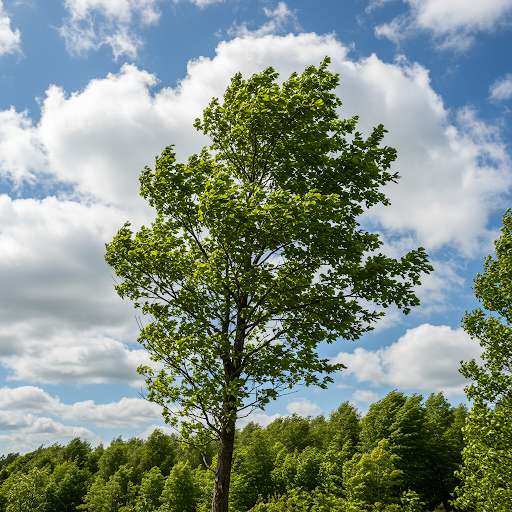
If you see any of these, in particular on a large tree near the structure, it is worth a professional risk assessment rather than waiting to see what happens in the next storm.
What should you do before a storm hits?
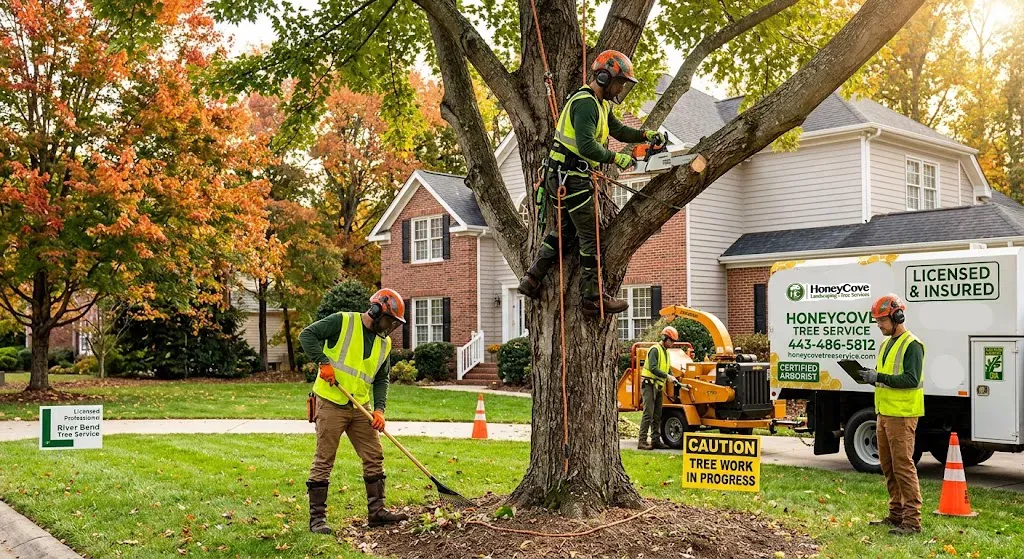
- Provide a hazard tree assessment for anything that might be warning signs.
- Remove or crane-dismantle hazard trees before they fail, not after.
- Clear deadwood from the trees you’re keeping so they can shed less debris in the wind.
- Know who to call for emergency response, and know that a storm is not the time to start looking for anything after a storm.
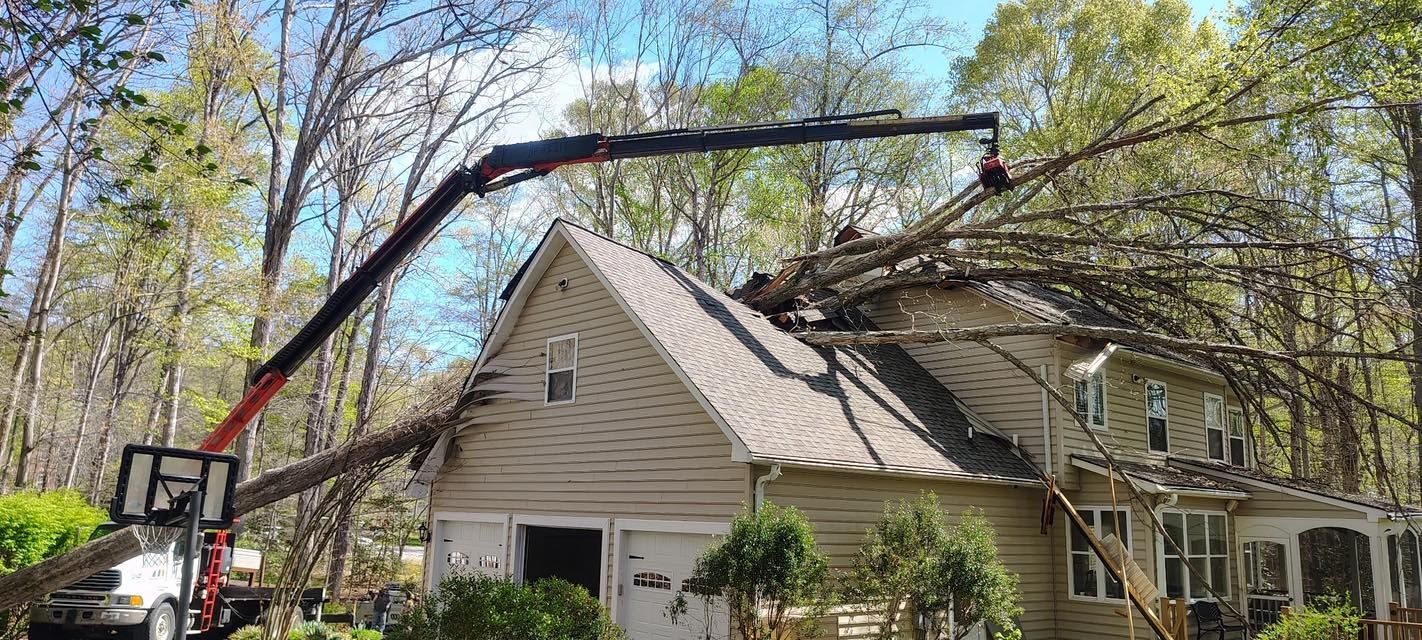
What do you do if a storm brings a tree down on your property?
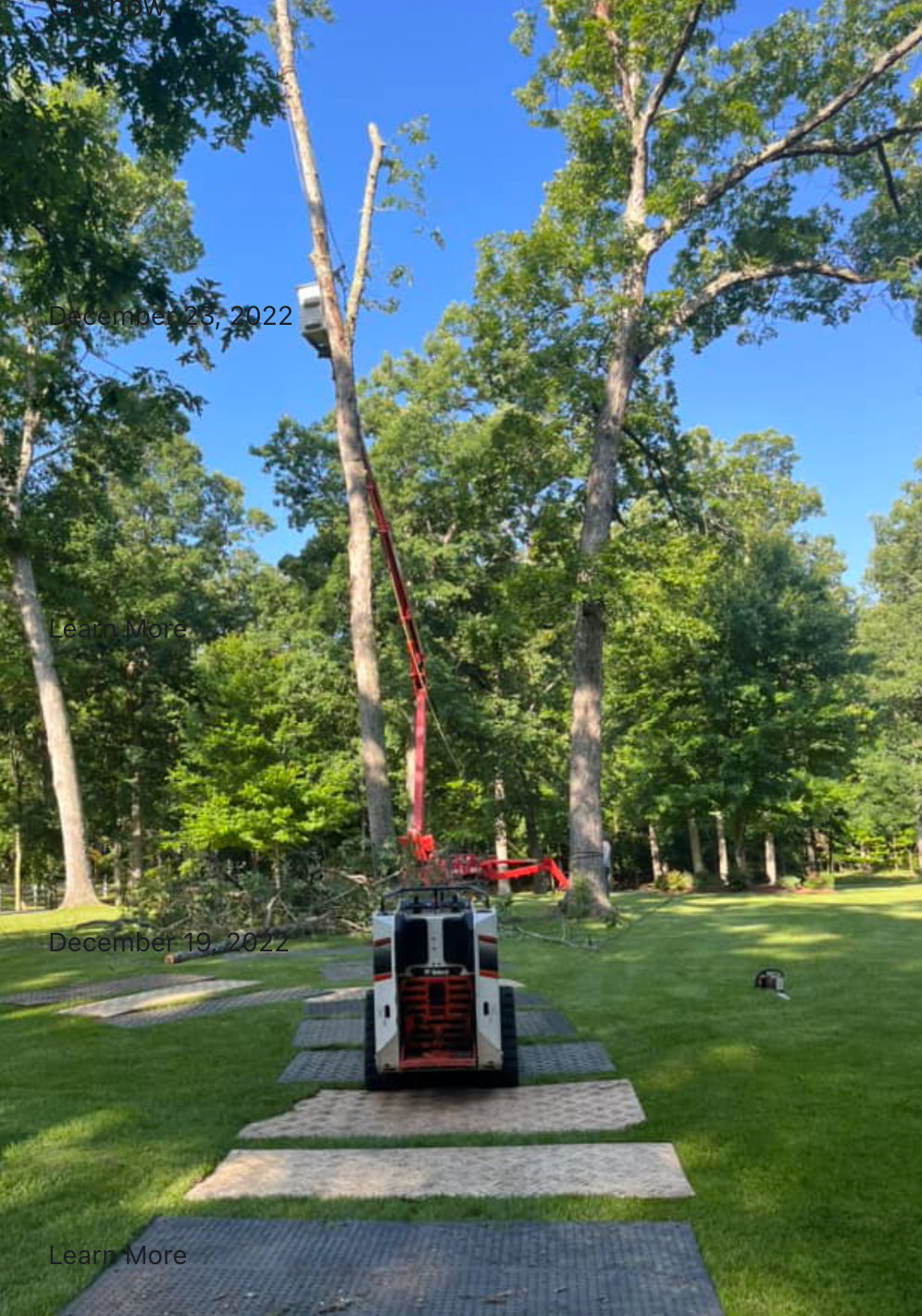
If a tree falls on your property — especially on a structure, power line, or vehicle — avoid trying to pull it down yourself. Downed trees are often under tension, can tangle with live power lines, and require specialized equipment for safe removal. Honey Cove handles emergency storm clearing in Calvert, St. Mary’s, Charles, and Anne Arundel counties, including fallen tree removal, debris clearing, and property assessment after the storm
Waterfront properties need extra attention.
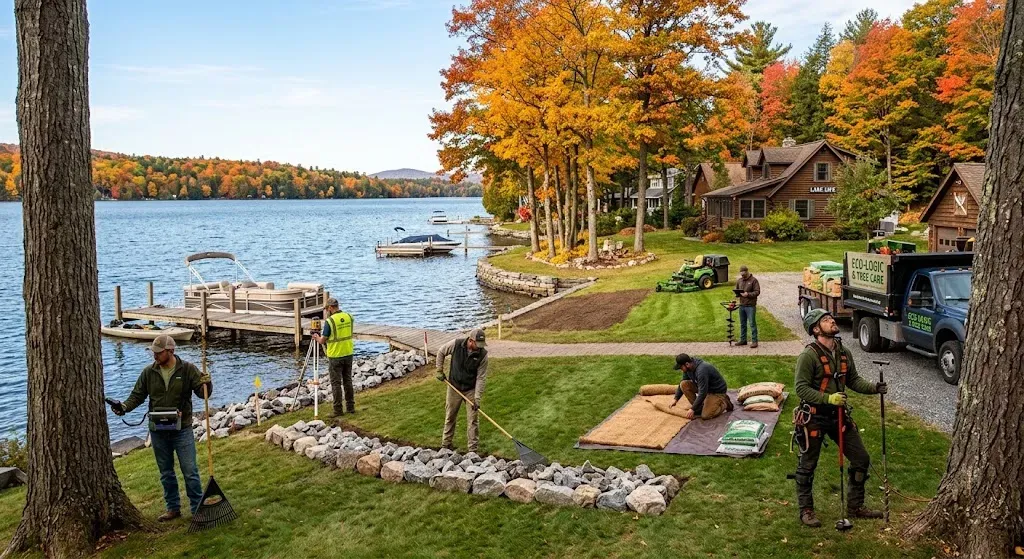
If your property is located in Maryland’s Critical Area — roughly 1,000 feet of tidal water — tree removal is regulated, and storm-damaged trees around the shoreline can also affect erosion control. Our Waterfront Property Preparation service is built specifically to do so: assessing hazard trees, negotiating critical area regulations, and preparing shoreline properties before storm season, not after.